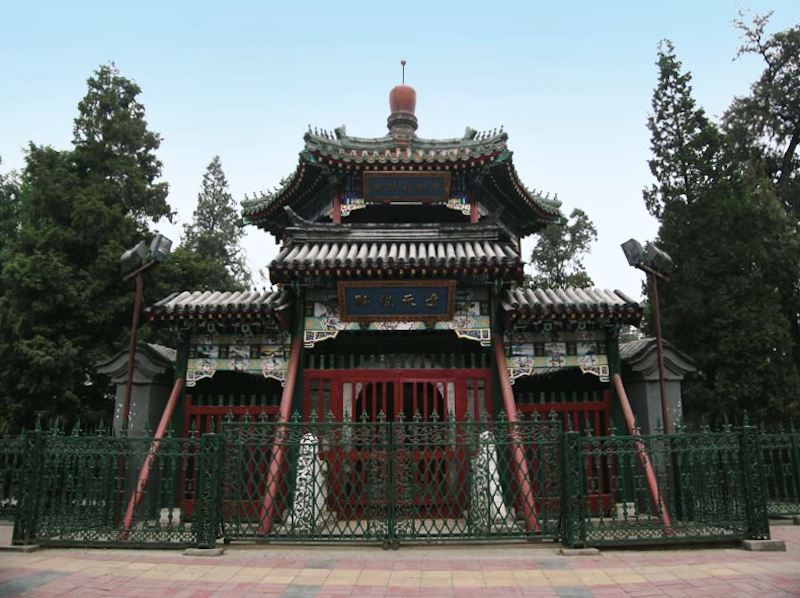
1. This building is associated with which religion?
Islam
Christianity
Judhaism
Buddhism
Some mosques in Eastern China were built in the traditional Chinese architectural style. This one in Beijing was first built about 1000CE.
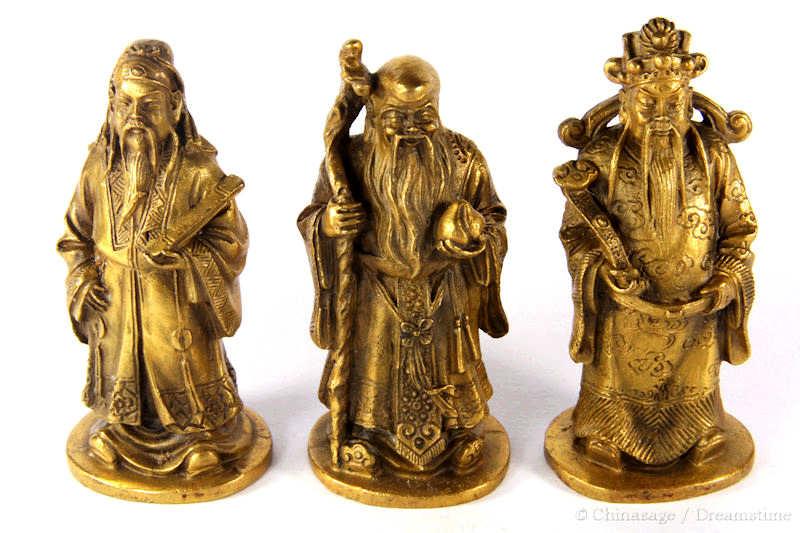
2. The traditional trinity of Daoist good luck gods: Fu, Lu and who?
Lao
Huangdi
Shou
Yu
Fu Shen; Lou (or Lu) and Shou (福禄寿 Fú Lù Shòu) form a trinity of deities giving good luck, respectively: Happiness; Prosperity and a Long life.
Daoist deities bringing happiness; prosperity and long life
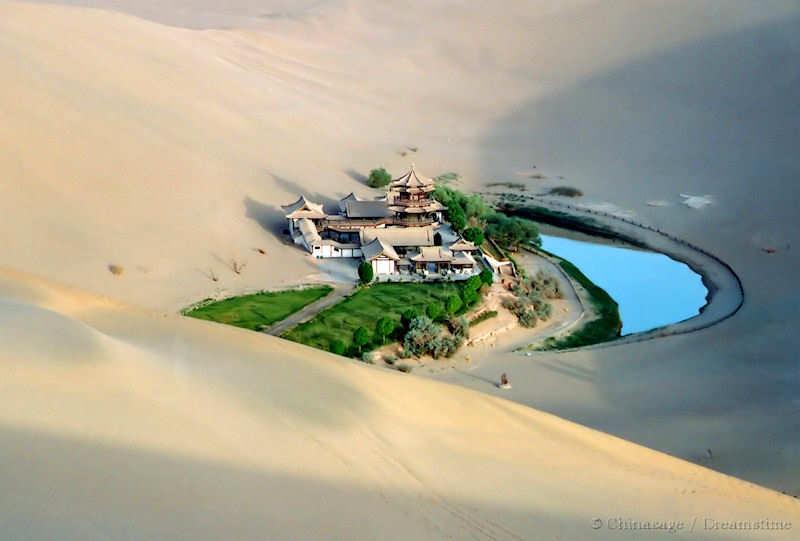
3. Crescent Lake is a popular visitor attraction in which province?
Henan
Gansu
Jiangxi
Ningxia
月牙泉 Yuè yá quán (Crescent Lake) is in an oasis just south of Dunhuang, Gansu.
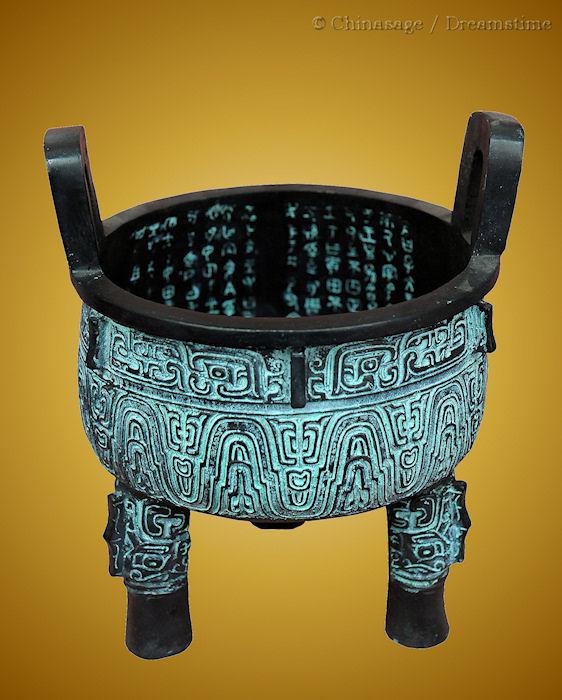
4. This ancient bronze vessel is called a what?
斗 dǒu
鼎 dǐng
壿 zūn
觥 gōng
The Ding was a sacrificial vessel, originally used as a cauldron for cooking and storing meat. Typically dates back to the Shang dynasty.
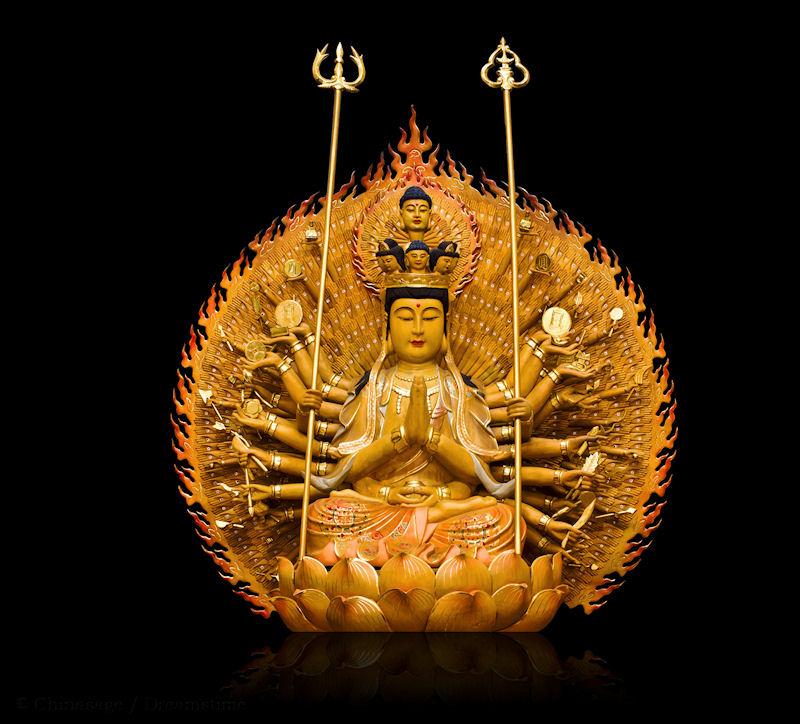
5. This is a statue of which Buddhist deity?
Guanyin
Ji Gong
Mi Le Fo
Pu Xian
The Buddhist Goddess of Mercy, Guanyin, listens to any who will seek her help. The statues often have many (sometimes a thousand) eyes and arms apparently because the order describing the desired form was misheard.
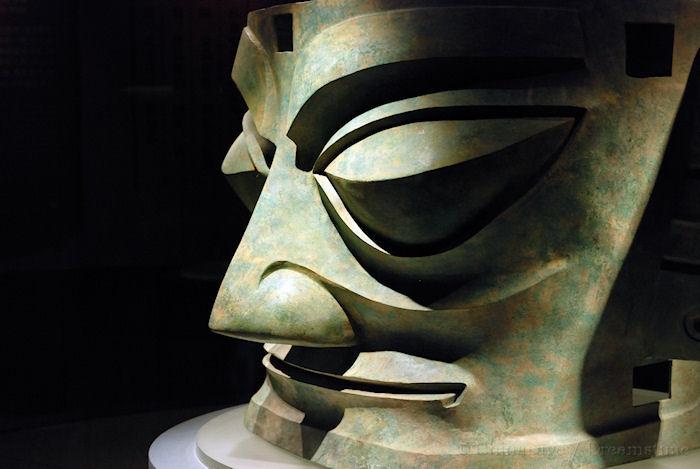
6. The distinctive style of this bronze head is associated with ancient people of which province?
Shandong
Sichuan
Guangxi
Gansu
The Sanxingdui culture of ancient Sichuan is little understood. It seems the people and their culture disappeared completely.
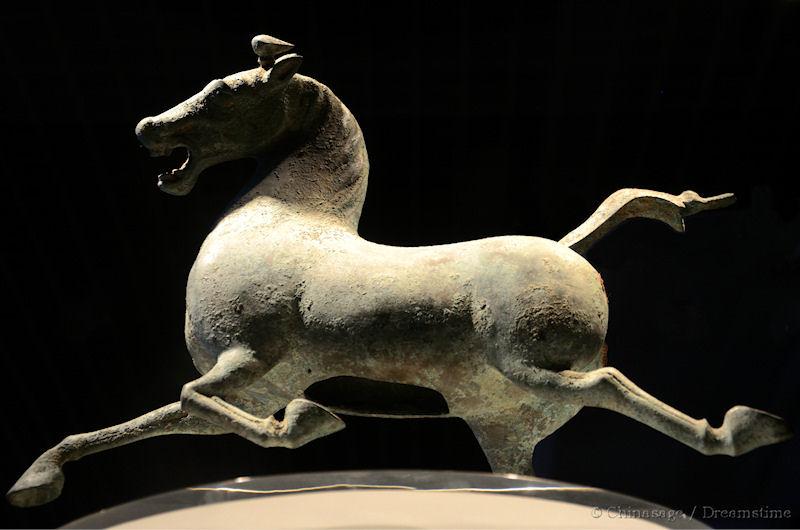
7. This emblematic bronze figure of a flying horse was found in which province?
Inner Mongolia
Guangxi
Henan
Gansu
The famous bronze sculpture found at the Leitai Tomb of Eastern Han Dynasty date has the horse stepping on a flying swallow to further emphasize its speed and grace.
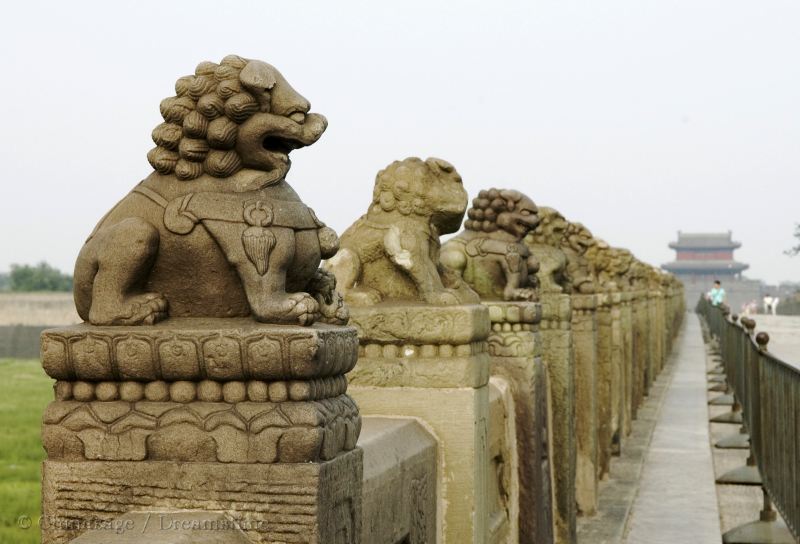
8. These individually sculpted lions decorate which famous feature?
Anji Bridge
Xuguo Bridge
Lugouqiao Bridge
Luoyang Bridge
The 卢沟桥 Lú gōu qiáo Bridge is also called the Marco Polo Bridge because the European traveler wrote so rhapsodically about it.
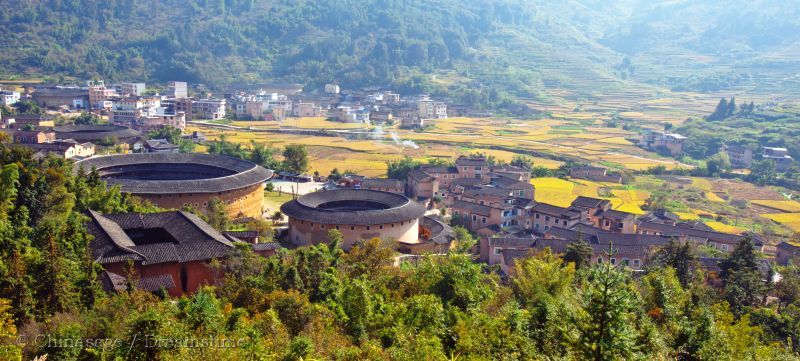
9. Where can you find these curious round buildings?
Sichuan
Guangxi
Liaoning
Fujian
They are ‘tulous’ the fortified dwellings of the Hakka people in the mainly tea-growing areas of Fujian province.
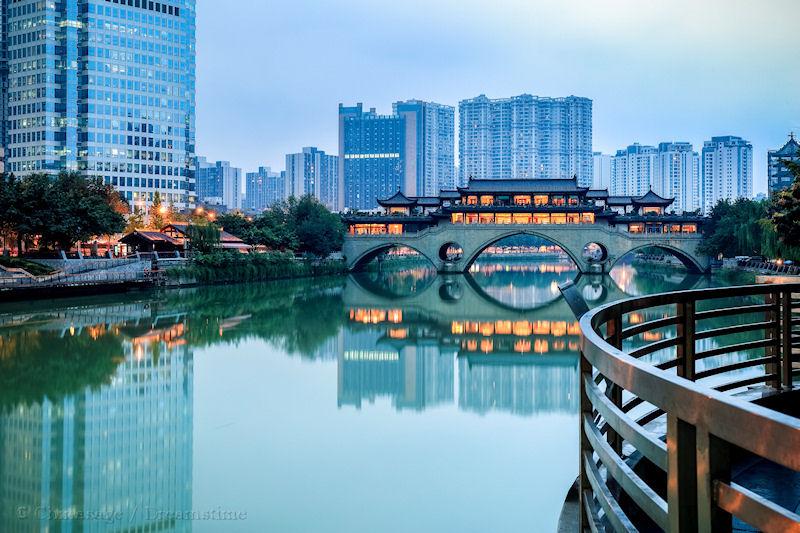
10. This famous bridge is located in which city?
Chengdu
Changsha
Nanchang
Guiyang
The Anshun bridge over the Jin River is at the heart of Chengdu, provincial capital of Sichuan.
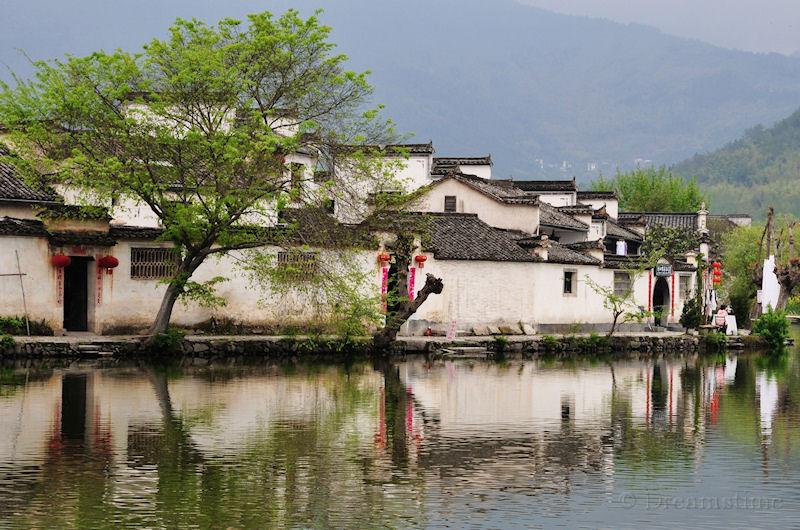
11. In which province can you find this historic village?
Hebei
Anhui
Guangdong
Shandong
Many of the houses of Hongcun village, Anhui date back to the Ming and Qing dynasties.
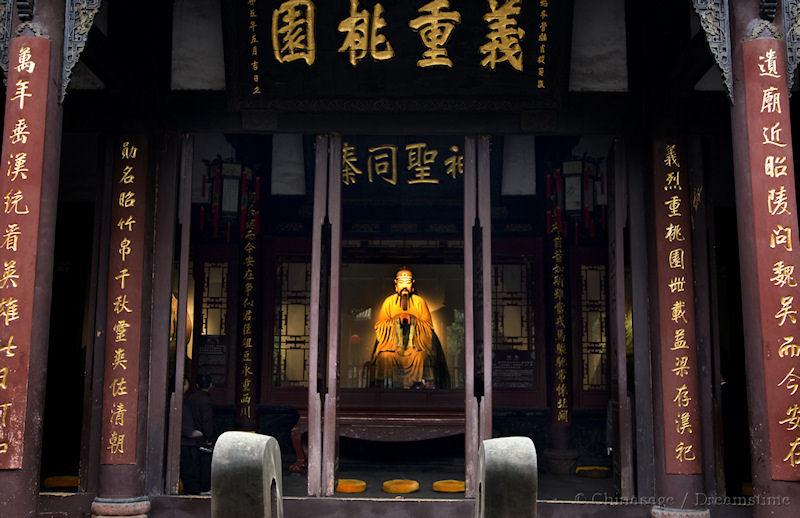
12. This temple in Chengdu, Sichuan is in honor of which hero from the Three Kingdoms Period
Xi Wangmu
Zhuge Liang
Liu Bei
Lu Ban
Zhuge Liang was the strategist who masterminded the defeat of Cao Cao in 208CE.
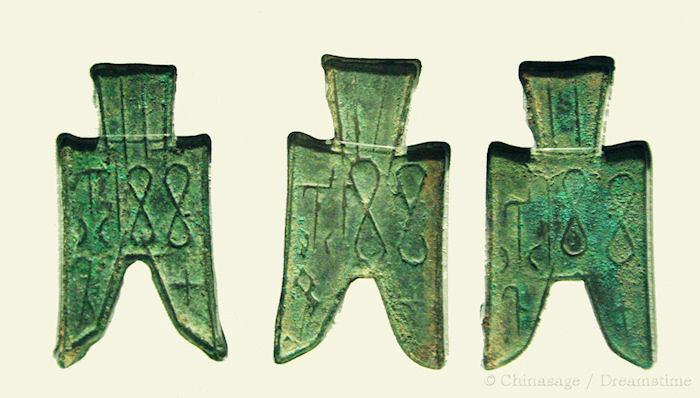
13. What were these ancient objects used for?
money
sacrifice
carpentry
agriculture
Spade money was used before coins came into use in China.
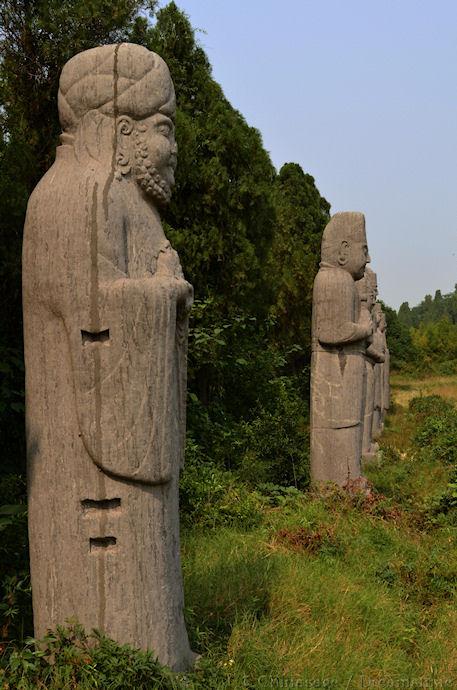
14. This sacred way to Imperial tombs is unusual for having some Indian-looking figures. Which dynasty does it commemorate?
Northern Song
Sui
Tang
Ming
The Northern Song dynasty had extensive contacts with other peoples along the Silk Route.
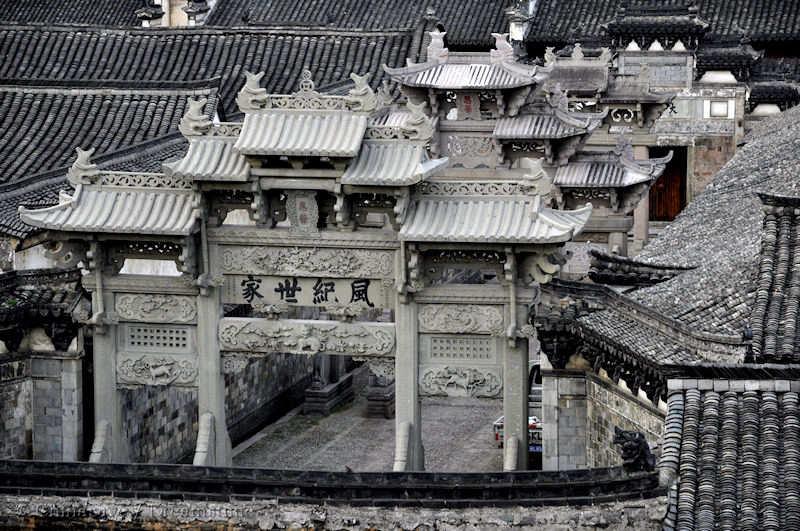
15. These impressive decorated arches are called what in China?
dougong
jianzhu
yuemen
paifang
A decorated archway was often built as a commemoration of someone important.
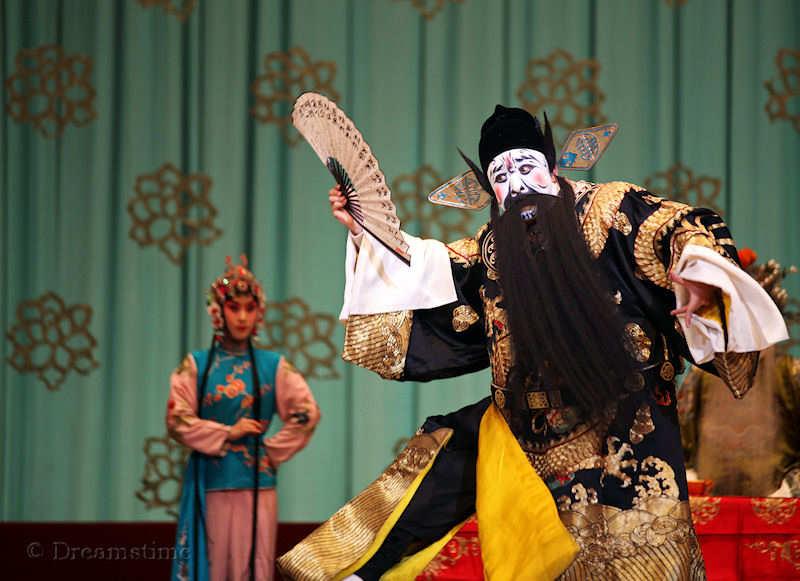
16. White make-up of a character in Chinese Opera usually symbolizes what?
Evil intent
Lustfulness
Innocence
Cowardice
Black, blue, green, red, yellow and white colored make-up help an audience distinguish the type of character in a Chinese Opera. White make-up usually identifies the bad guys.
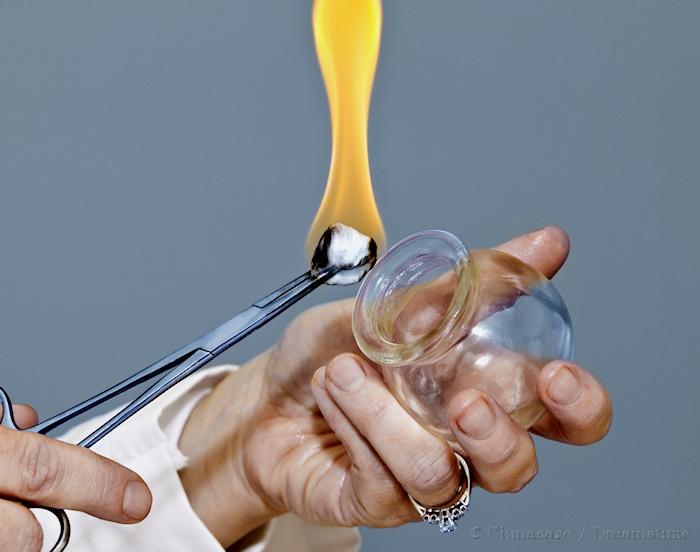
17. This heated glass cup is being prepared for doing what?
capture 'qi'
containing herbs
trapping insects
applying to skin
Cupping is a technique where a jar is filled with heated air and then sealed tight against the skin. The cooling air causes the skin to be forced up into the cup. It is supposed to work by drawing diseases out of the body.
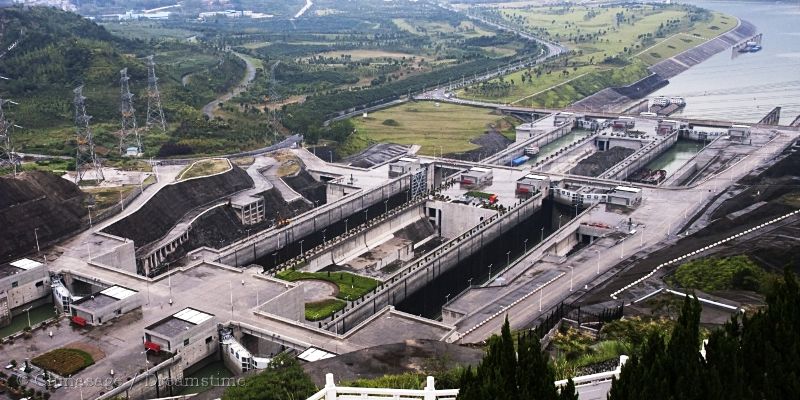
18. The great locks at the Yangzi Three Gorges Dam were completed when?
1990
2006
2014
1998
The dam is not the largest in the world, but it is the largest hydro-electric power station capable of generating 18,300MW of power.
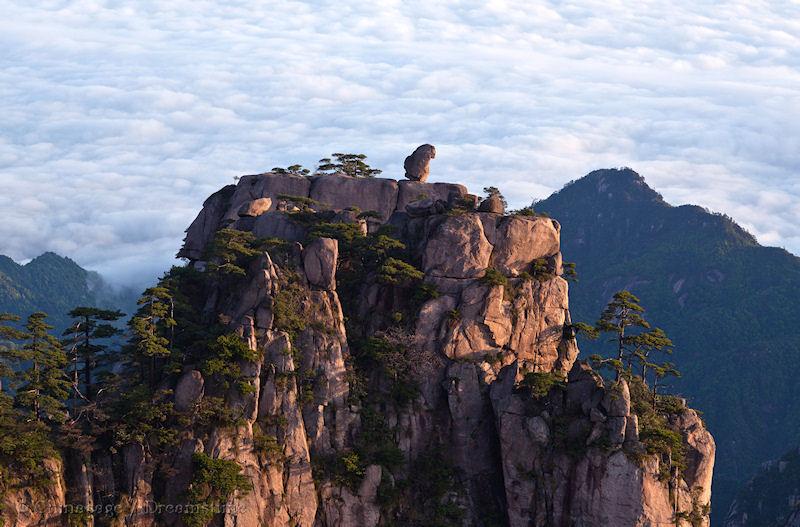
19. In which province are these famous mountains?
Anhui
Guangxi
Shandong
Xinjiang
A notable attraction of Anhui is scenic Huangshan (Yellow Mountains) in the south, a very popular mountain range to climb for Chinese as well as foreign visitors.
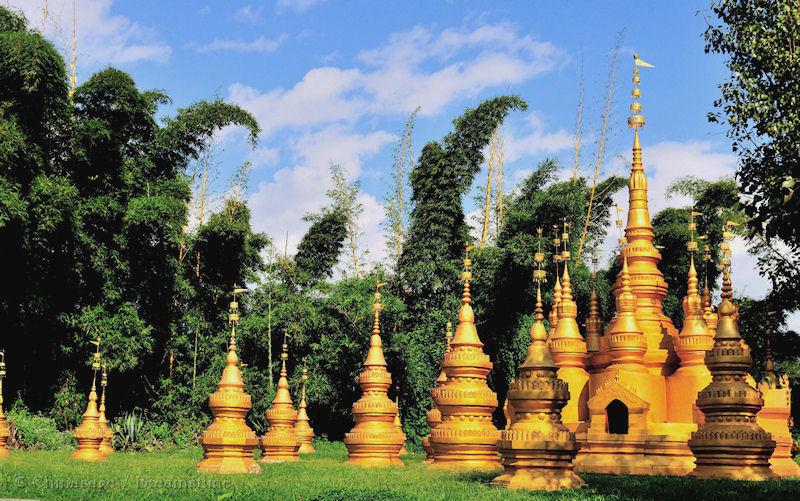
20. Where might you expect to see a set of golden stupas like these?
Fujian
Inner Mongolia
Qinghai
Yunnan
The Buddhist stupas of Yunnan are similar to those of neighboring Thailand and Burma. It is in an area of the Dai minority people.

 Advanced level picture quiz all about China.