Chinese language : Lesson 3
Following on from lesson 2 here are some everyday useful phrases that you will find useful when traveling in China.
In this third lesson we look at simple transactions at shops and restaurants. With our previous lesson 1 and 2 we build on the basics that are useful for a first visit to China.
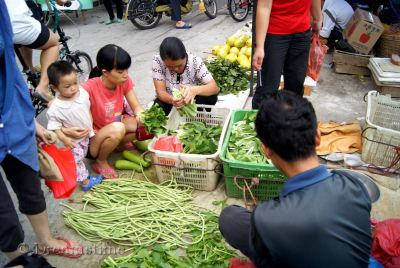
At the store and market
When learning Chinese it is important to use the correct tone. As an example, consider mai which can mean either buy or sell just depending on the tone. Let's introduce some things you might want to buy.
Colors
We have already introduced some of the colors, here is a more complete set. Colors are often used symbolically in China, for a guide to the meaning and history of the use of colors please see our color symbolism guide.
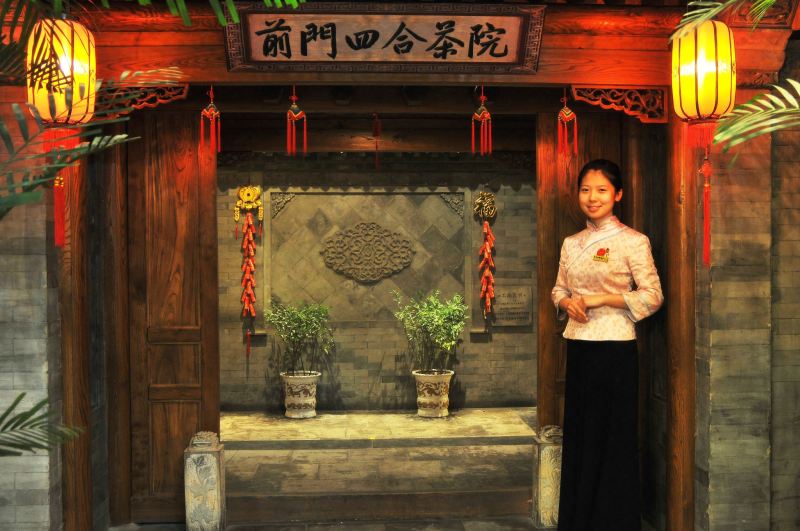
Image by Luo Shaoyang ➚ available under a Creative Commons license ➚
Sentences
Buying a ticket
Nǐ hǎo
你好
wǒ
我
yào
要
mǎi
买
yī
一
zhāng
张
piào
票
Hello, I want to buy a ticket. Don’t forget the measure word zhang, it is needed in this context. Also note that verbs in Chinese are often strung together as in ‘want-buy’.
Nǐ
你
yào
要
qù
去
nà r
那儿
Where do you want to go?. The response by the ticket seller will be to ask where you want to go to. The question is implied in this case there is no need to add ma at the end. This is another double verb form ‘want-go’ there is no need for a want ‘to’ go construction as there is in English.
Dào
到
shàng hǎi
上海
Go to Shanghai. Shanghai literally means ‘on Sea’ or ‘by Sea’.
Shén me
什么
shí hòu
时候
"At what time?". This phrase was included in lesson 2, hou implies a wait.
Míng tiān
明天
shàng wǔ
上午
bā diǎn shí fēn
八点十分
Tomorrow morning at 8:10. Our date and time guide explains how to express times in Chinese. The largest units come first and the time of day (morning, afternoon, evening) is needed in place of 'am' or 'pm'.
Děng yī děng
等一等
yǒu
有
piào
票
Please wait... Yes I have a ticket. By repeating a verb separated with yi softens a word and makes it more informal and colloquial.
Duō shǎo
多少
qián
钱
How much does it cost?. One way of asking a question in Chinese is to give the two opposite extremes, so how much is literally 'many-few'. This is a common and useful phrase when out shopping.
Gěi
给
wǒ
我
wǔ bǎi wǔ shí sān
五百五十三
kuài
块
Give me 553 kuai. We have a separate section devoted to all the numbers in Chinese. The unit of yuan is called kuai (piece) in spoken and not written Chinese.
Having bought a ticket and traveled to Shanghai now we can go to the shops and have some food.
Nǐ
你
yào
要
nà
那
zhǒng
种
yán sè
颜色
What color do you want?. While shopping you might be asked which color of fabric or other thing you want.
Hóng de
红的
hái shì
还是
huáng de
黄的
The red one or yellow one. You can say red one by using the possessive 'de' combined with the color.
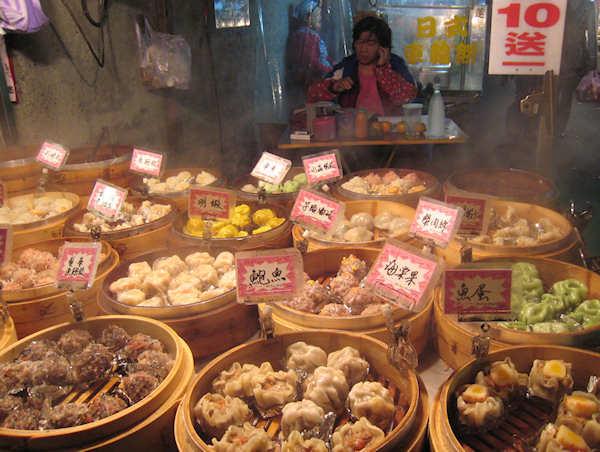
Ordering food and drink
Wǒ mén
我们
yào
要
liǎng
两
bēi
杯
kā fēi
咖啡
We want two cups of coffee. To ask for 2 of anything you need liang rather than the number 2 er as this is only used for counting.
Qǐng
请
zuò
座
Please sit down. An important instruction to learn.
Qǐng
请
gěi
给
wǒ mén
我们
xiē
些
jiǎo zǐ
饺子
Please bring us some dumplings. The use of please is not essential as it would be in English ‘we want’ is good enough. Jiaozis are not to be confused with ‘English dumplings’ they are more like ravioli - meat or vegetables wrapped up in dough and usually steamed. See here for a recipe.
Wǒ
我
yào
要
yī
一
píng
瓶
qīng dǎo
青岛
pí jiǔ
啤酒
I want a bottle of Qingdao beer. Qingdao ➚ in Shandong is world famous for its German style beer.
Nín
您
ne
呢
What about you?. This a shorthand way of repeating the same question to someone else. In this case it is asking whether someone else would also like a drink.
Hái
还
yào
要
qīng cài
青菜
mǎ
吗
Are there any more vegetables?. Qingcai can stand for vegetables in general.
Nǐ
你
yào
要
duō
多
shǎo
少
píng
瓶
pú táo jiǔ
葡萄酒
You want how many bottles of wine?. Many-few can be used to ask a how much or how many question for anything not just about money.
Wǒ mén
我们
hē le
喝了
sì
四
bēi
杯
lǜ
绿
chá
茶
We have drunk four cups of green tea. Adding le to a verb puts it into the past tense.
Qǐng
请
gěi
给
wǒ
我
yī
一
shuāng
双
kuài zǐ
筷子
Please bring me a pair of chopsticks. The correct measure word needs to be used for chopsticks. ‘shuang’ is used for objects that come in pairs (socks, shoes, gloves etc.).
Hái
还
yào
要
liǎng
两
wān
碗
mǐ fàn
米饭
Also want two bowls of rice. Another necessary measure word is ‘bowl’. As rice is the staple food in southern China, mifan can be used for food in general.
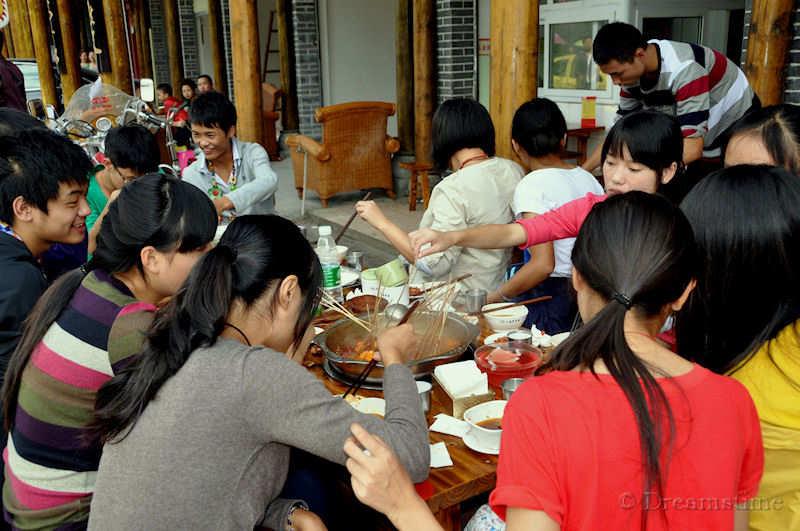
Vocabulary
Sound files kindly provided by shtooka.net ➚ under a Creative Commons Attribution Share Alike License