Intermediate level quiz all about Chinese traditions.
1. The swastika symbol in China symbolizes a wish for what?
success
death
long life
children
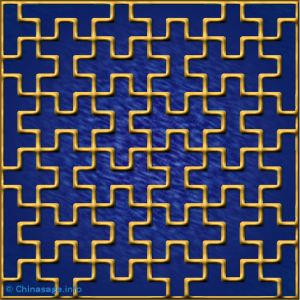
The swastika is a Buddhist good luck symbol but in China it became used as a symbol for long life. The figure represents the flow of blood in the Buddha's heart.
The two forms of swastika combined to give a lattice window design motif.
2. Which of these is NOT considered a strongly nourishing food in China?
beef steak
Black dates
Duck
Bird's nest
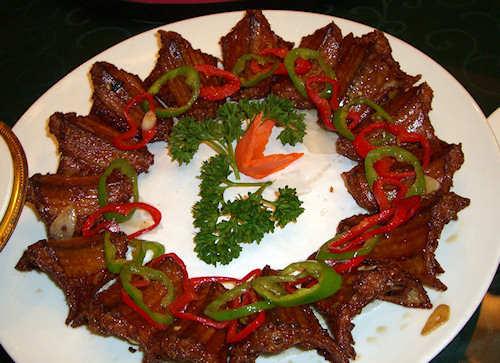
Beef steak is not considered to be a highly nourishing food, it is too high in protein to be well balanced.
3. The Qilin is broadly similar to which western mythical creature?
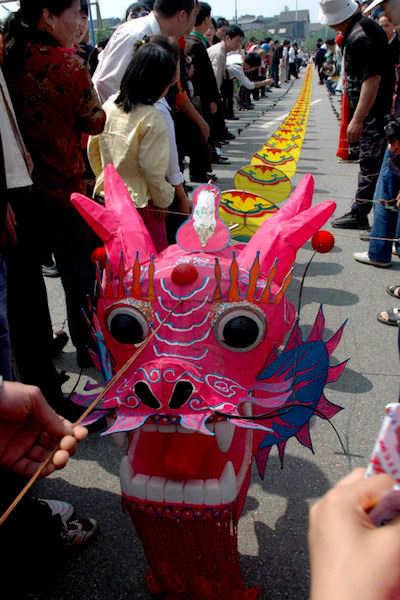
unicorn
chimaera
griffin
cockatrice
The Chinese qilin's similarity to the Western unicorn is mainly due to its association with gentleness, virtue and benevolence.
4. The stars in the Chinese sky are organized as what?
mountain ranges
provinces
chess game
Imperial court
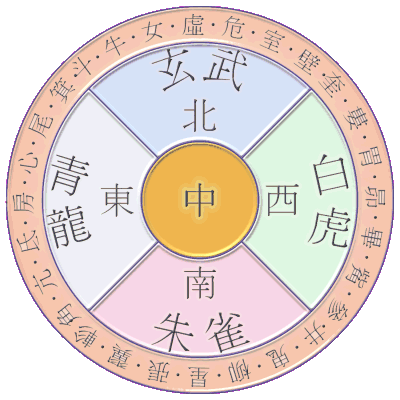
Rather than a mix of Greek legends the Chinese night sky is more logically arranged to be like the Imperial court down on Earth with prisons, courts, orchards and temples.
5. Mongolian food has many dishes that use which meat?
lamb
beef
yak
goat
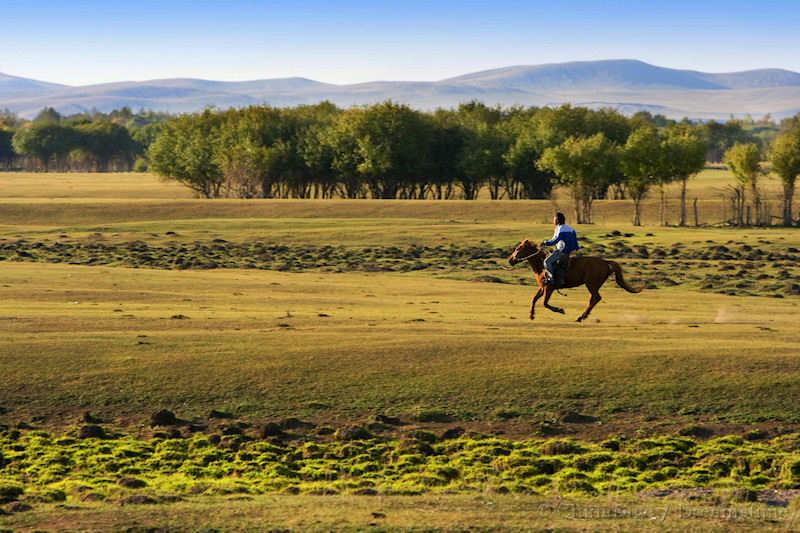
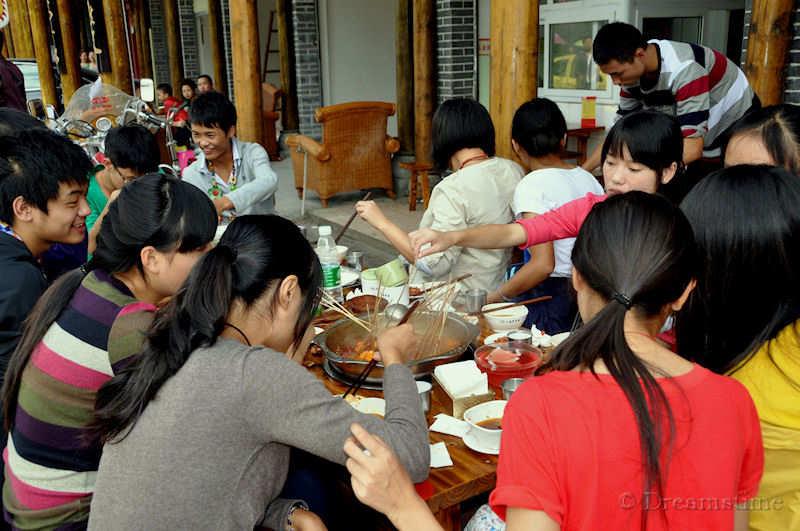
The vast grasslands of the Mongolian steppe are traditionally farmed by nomads herding sheep and goats. Lamb is much rarer food in southern China. Mongolian hot pot based on lamb is the best known Mongolian dish which also has vegetables and noodles.
6. Under what kind of tree did the Buddha achieve enlightenment?
ginkgo
juniper
paulownia
pipal
December 8th celebrates Buddha's enlightenment underneath the pipal or bodhi tree (c. 400BCE).
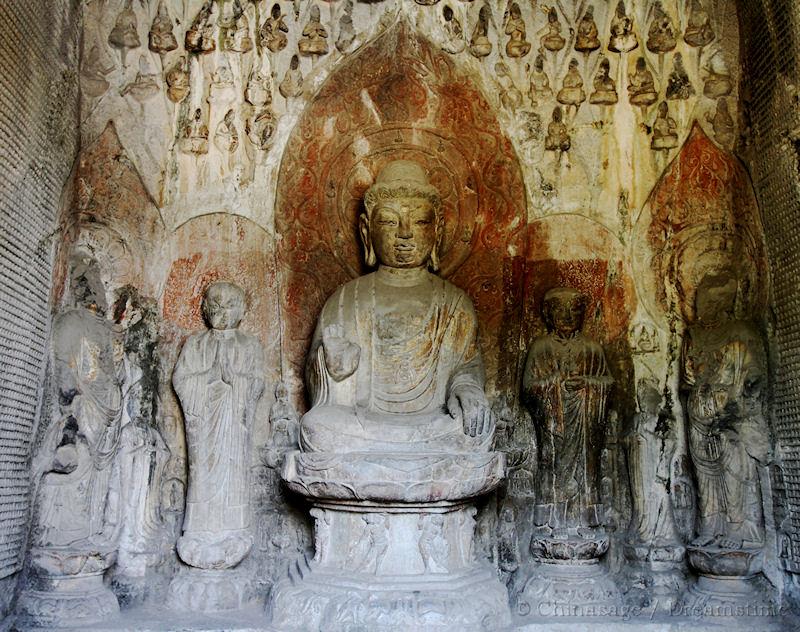
The Longmen grottoes, Henan feature many Buddhist carvings
7. Mao's wife Jiang Qing was responsible for major reforms in which area?
opera
factories
steelworks
handicrafts
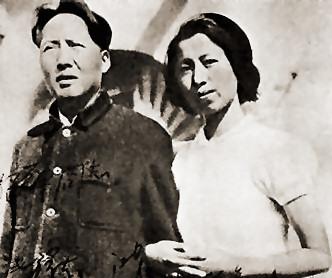
Mao's third wife Jiang Qing was an actress and was put in charge of zealously reforming the arts. Traditional Beijing Opera was banned during the Cultural Revolution because the stories were about the old, feudal structures of society.
8. Which is NOT included in pairs of animal statues along the sacred road to the Ming Tombs?
dragon
camel
lion
kylin
The lifelike statues were supposed to come to life to defend the Ming Tombs. As the dragon represents the Emperor himself it is not included in the set of defenders.
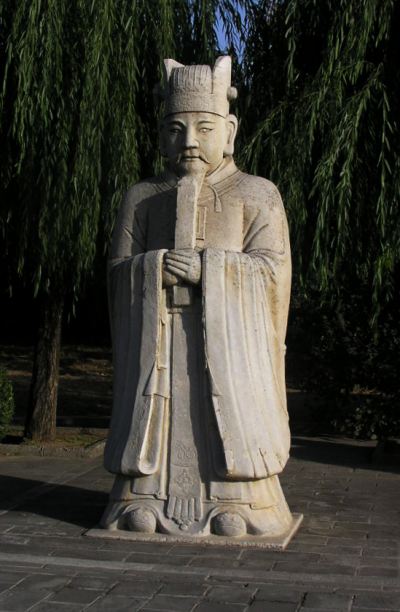
Statue on the way of souls towards the Ming tombs near Beijing. This is one of a pair of facing statues representing an official waiting to deliver his reports to the emperor. The reports would be in the form of vertical ideogramic script brushed onto a number of wood or ivory tablets. Available under a Creative Commons License ➚
9. Lion stone statues are often placed at temples entrances, by tradition what does the one on the right hold in its paw?
dove
ball
halberd
scroll
The right-hand lion has a ball as it it the male lion, the lioness on the left traditionally holds a lion cub.
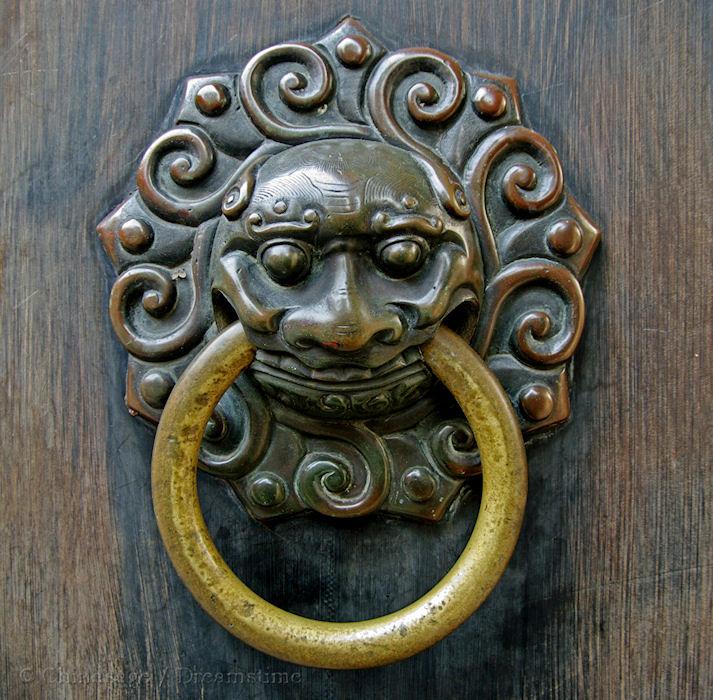
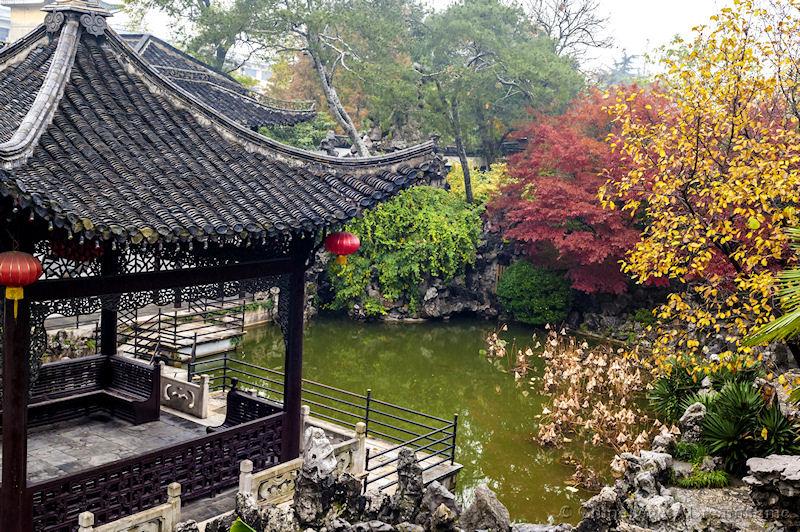
Chinese lion door knocker in Yuyuan Garden, Shanghai
10. Shaoxing is famous for producing what?
black tea
soy sauce
rice wine
chillies
Shaoxing in Zhejiang province is famous for its potent wine (but more like a spirit) made from fermenting rice.
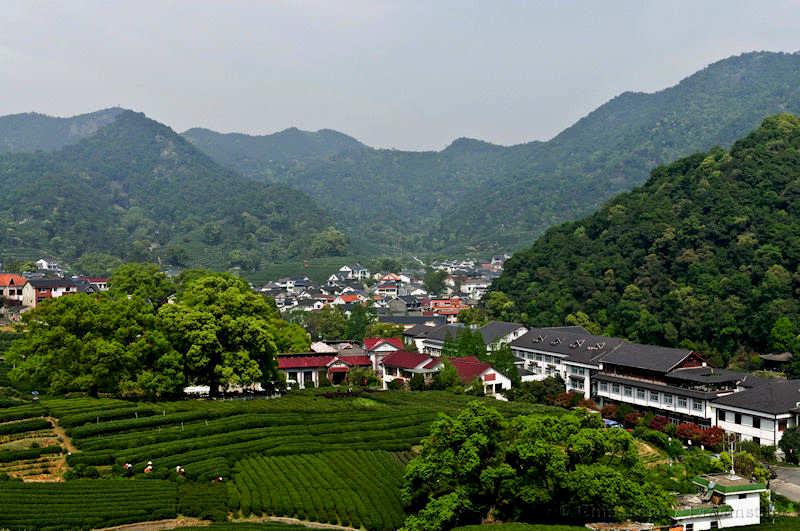
Zhejiang scenery near Hangzhou including a tea plantation
11. How many white pieces are there in a standard game of weiqi (go)?
180
16
50
200
There are 181 black pieces in weiqi (game of go) and black always places a piece first on the 19x19 board. By the end of the game, if no pieces are removed half the places would be filled.
12. What grows in the garden of the Queen Mother of the West that bestows immortality?
lychees
peaches
azaleas
jujubes
The peaches of immortality were famously stolen by the Monkey King as retold in 'The Journey to the West'.
The English word 'tea' comes from the local Fujian dialect which pronounces 茶 as 'ti'. In mandarin Chinese it is pronounced 'cha' which is also sometimes used as 'char' for tea in English. British tea used to be imported mainly from the Fujian sea ports.
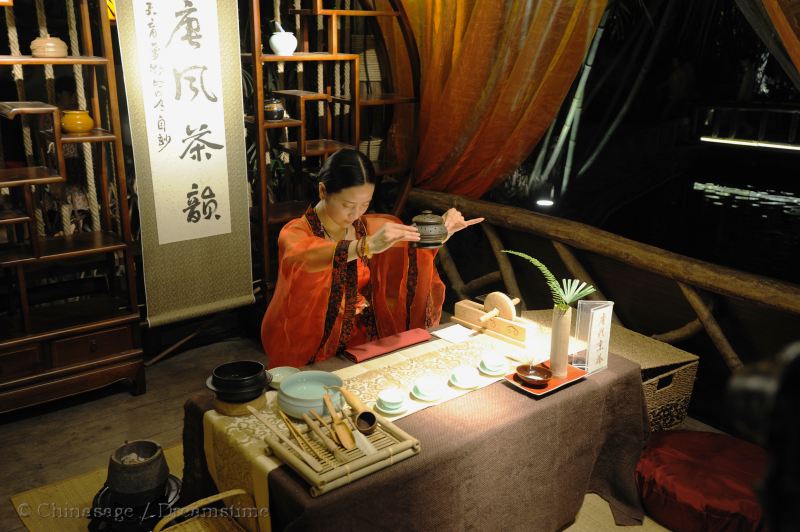
Demonstrating the elaborate tea ceremony at the Du Fu Thatched Cottage Museum, Chengdu, Sichuan
14. Single's day in China is on which day each year?
April 11th
April 1st
December 1st
November 11th
The choice of date is based on the fact that 11.11 has four single 'ones' in it. It began in the 1990s at Nanjing. Single's day is now a popular day to declare love and propose marriage and for single people to buy themselves presents.
15. General Hanxin used kites in his military campaigns to do what?
signaling
drop propaganda
making aerial noises
measure distance
General Hanxin (c. 231-196 BCE) used kites to measure the distance to enemy walls so that guns could be targeted and tunnels could be excavated to the correct distance. A kite was flown so that its shadow would just touch the target object, by knowing the length of string and the angle of sun and string the exact distance could be calculated.
17. In Feng Shui the fire element is associated with which taste?
bitter
umami
salty
sour
The fire element is also associated with the number 7 and the planet Mars.
18. Bamboo is used for many things, which of these is it NOT been used for?
eating
making bread
making hats
making scaffolding
There are few materials that permit you to eat it from a bowl, sitting on a chair within a house all made from it.
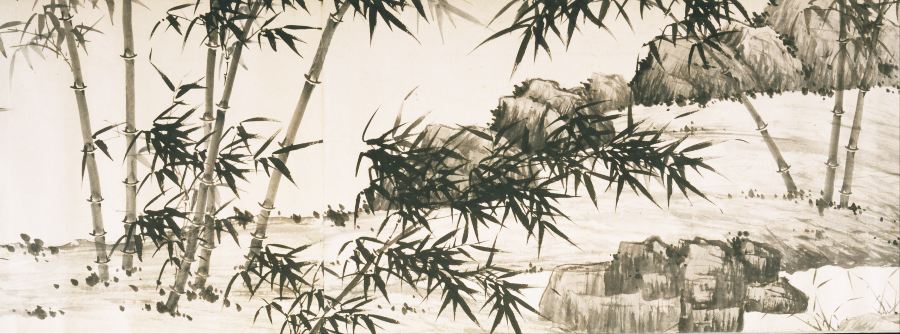
This most versatile of substances is bamboo. it can be made into almost anything: houses, furniture, baskets, pipes, fencing, paper, clothing, cups, plates, flutes, beer, hats – and you can even eat it as the young shoots are eaten as a delicacy.
20. The Isles of the Blessed were thought to lie in which direction from China?
north
south-west
west
east
The Isles of the Blessed is the land of the immortals. Emperors have sought the islands to find the herb of immortality. It is possible they are based on the islands of Japan.
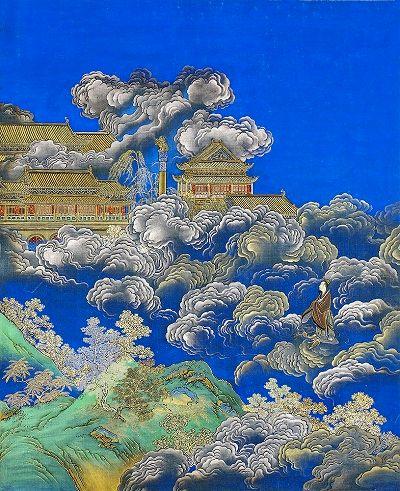
Painting and calligraphy from a large format Chinese album illustrating stories of Taoist immortals -people who sought or achieved immortality. One of 15 paintings. The text concerns a Taoist adept, Wang Qiao, a Han period official. Image by British Library ➚ available under a Creative Commons License ➚

 Intermediate level quiz all about Chinese traditions.