1. How long is the reservoir created by the Sanxia Daba (Three Gorges Dam) along the Yangzi River?
200 miles [322 kms]
40 miles [64 kms]
400 miles [644 kms]
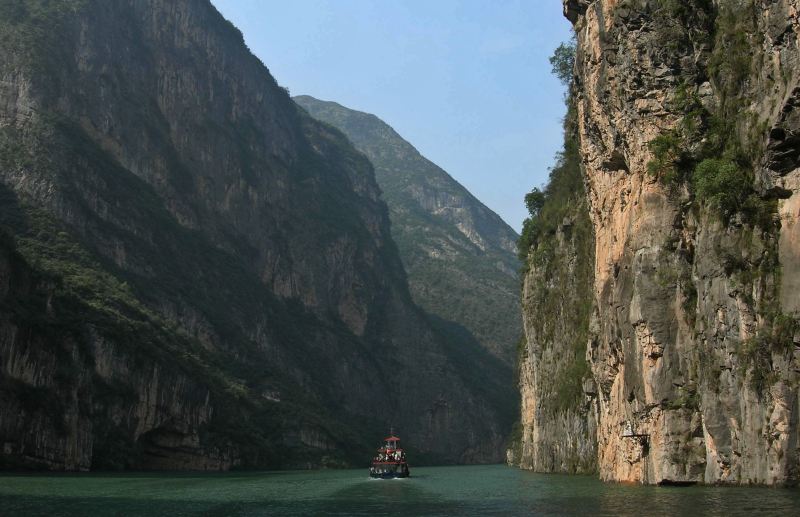
The flooding of the Yangzi valley displaced at least one million people. The dam has the largest lock and is the largest hydro-electric system in the world.
2. What is the average height of the Tibetan plateau?
14,500 feet [4,420 meters]
9,500 feet [2,896 meters]
12,500 feet [3,810 meters]
The high altitude of Tibet makes breathing difficult. Winters are harsh and summers cool and short.
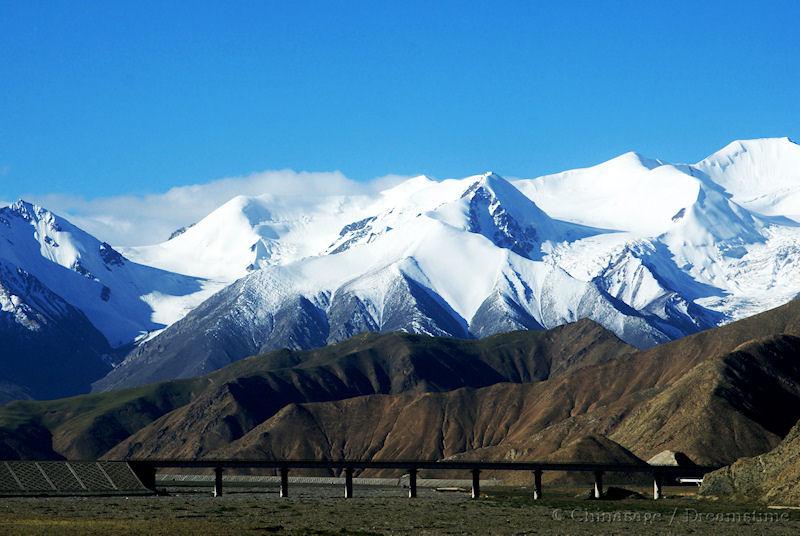
Qinghai-Tibet railway near mountains at Golmud, Qinghai
3. What is the range of mountains called that separates the Yellow and Yangzi river basins?
Nanling
Khingan
Qingling
The Qingling mountains form an important historic and climatic boundary between northern and southern China.
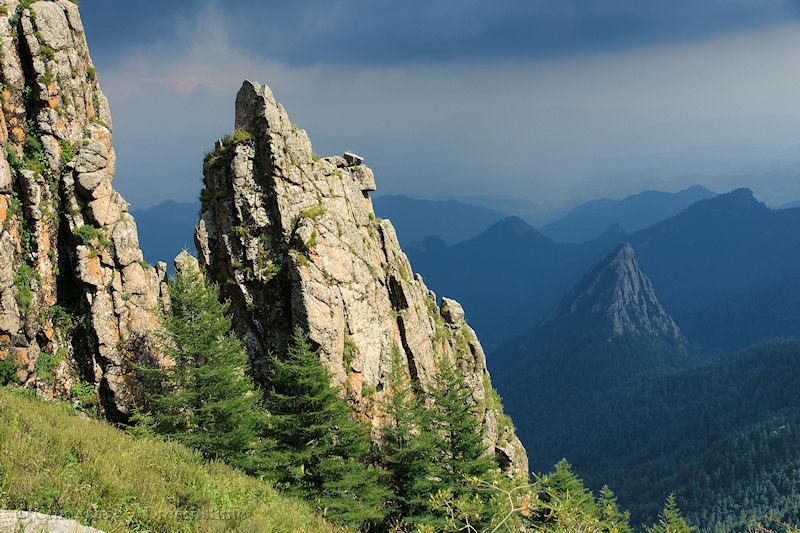
Luya Mountain in Shanxi
4. Which province was the most recently created?
Xinjiang
Jilin
Chongqing
The province of Sichuan was split into two parts in 1997, which had by far the largest population. The eastern section of Chongqing is governed by the city of Chongqing and follows the Yangzi river valley.
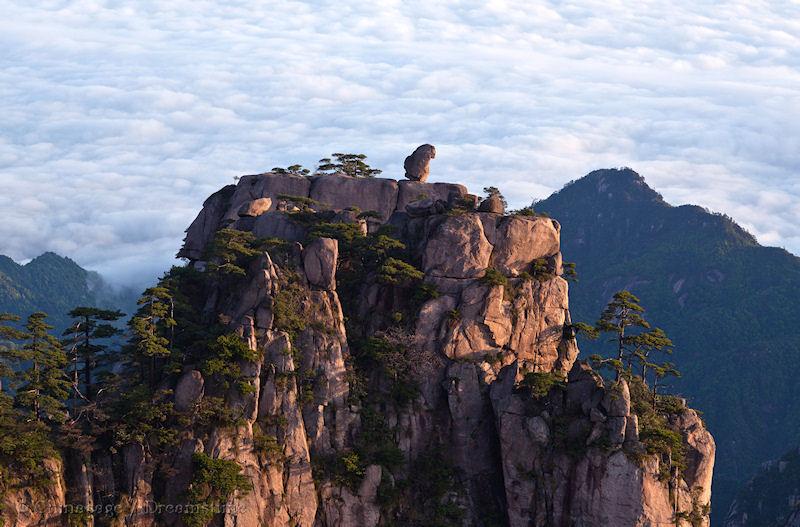
Stone Monkey' gazing over view from Huangshan (Yellow) Mountains in Anhui Province
5. The Yu (or Yuyuan) gardens are a famous spot in which city?
Chengdu
Shanghai
Nanjing
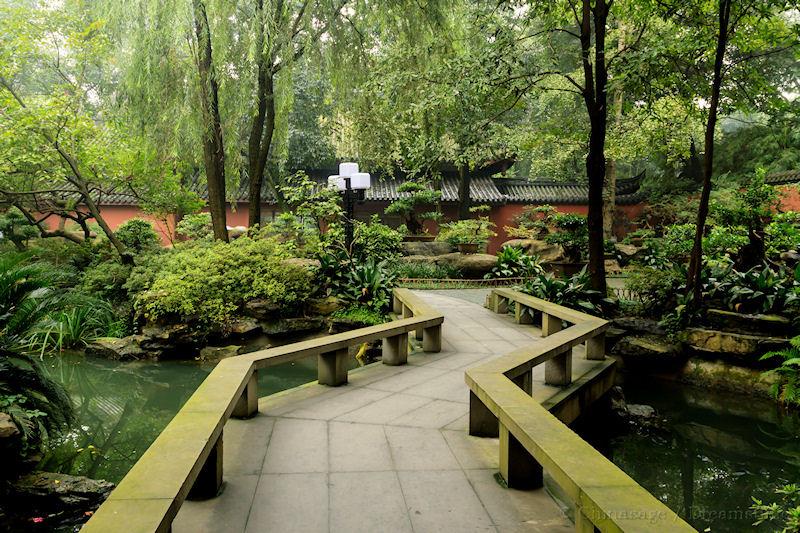
Shanghai's Old Chinese City has the narrow alleys, temples and markets typical of an old Chinese town. It has the famous traditional ‘Yu Gardens’ which were originally built in 1537.
6. The Changbai mountains are on the border of China with which other country?
Vietnam
North Korea
Mongolia
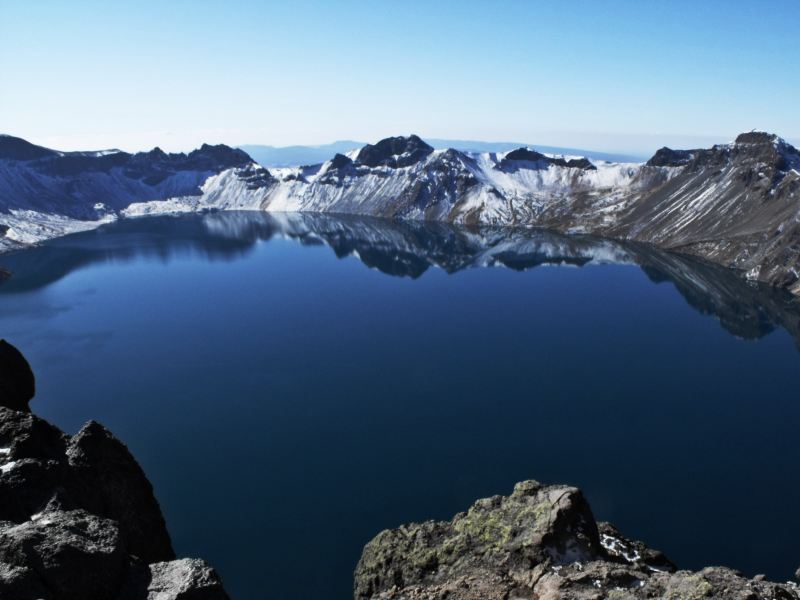
Changbai means ‘forever white’ as the mountains have permanent snow cover. The border with North Korea runs directly through the middle of volcanic Lake Tian.
7. The city of Guangzhou stands on which major river?
Li river
Han river
Pearl river
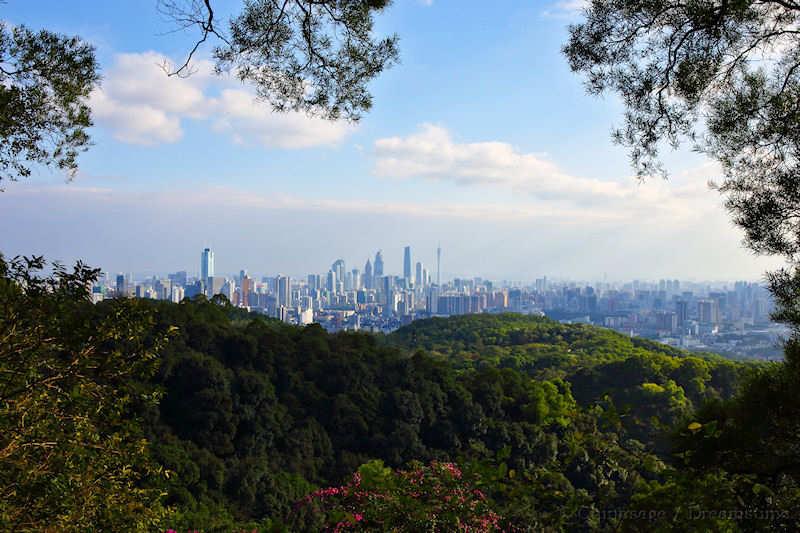
Guangzhou, on the Pearl (Yu) river estuary, has been a major port for many centuries. Hong Kong and Macau stand on either side of the large outflow into the South China Sea.
8. Excluding Macau which province has the lowest population in China?
Anhui
Hong Kong
Tibet (Xizang)
Although the second largest in area Tibet has a low population - and so has the lowest population density of any province.
9. Which country administered the island of Macau until 1999?
Portugal
Japan
Germany
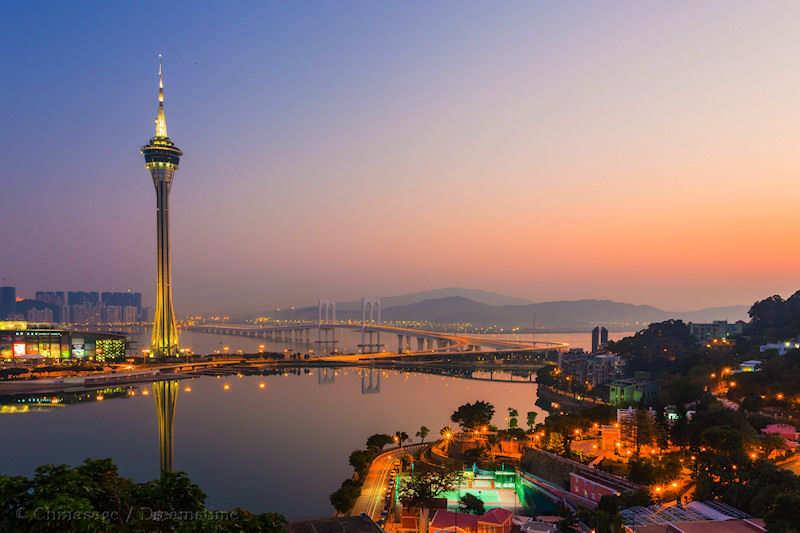
Macau was governed by Portugal for nearly 450 years. Macau stands on a rocky peninsular on the mouth of the Zhu (Pearl) River estuary connected by bridges to Taipa and Coloane Islands .
10. Xinjiang is home to many ethnic groups; which one is acknowledged in its official name?
Uyghur
Kazakh
Kyrgyz
The Uyghur (Uigur) people represent about 43% on the population of Xinjiang, closely followed by Han Chinese at 41%.
11. Sanjiangyuan Three Rivers National Park is the source of which major rivers?
Li; Yellow and Yangzi
Pearl; Yellow and Yangzi
Mekong; Yellow and Yangzi
Sanjiangyuan is a large area in south-eastern Qinghai province with the Mekong eventually heading south, the Yangzi east and the Huang he (Yellow) river north.
The Star Ferry is a passenger ferry in Hong Kong that is mainly now a tourist attraction. It was established in 1888 when there were no bridges to the island of Hong Kong.
13. By what name do the people call their own country of China?
Zhongguo
Hanguo
Chuka
The Chinese people themselves have several names for their own country. 中国 zhōng guó is the official name. It means literally 'middle or central' 'country; kingdom or region' and was based on the traditional view that China is the center of the civilized world.
14. The Hunza Valley is a historic land route into China, which country does it lead to?
Kazakhstan
Pakistan
Afghanistan
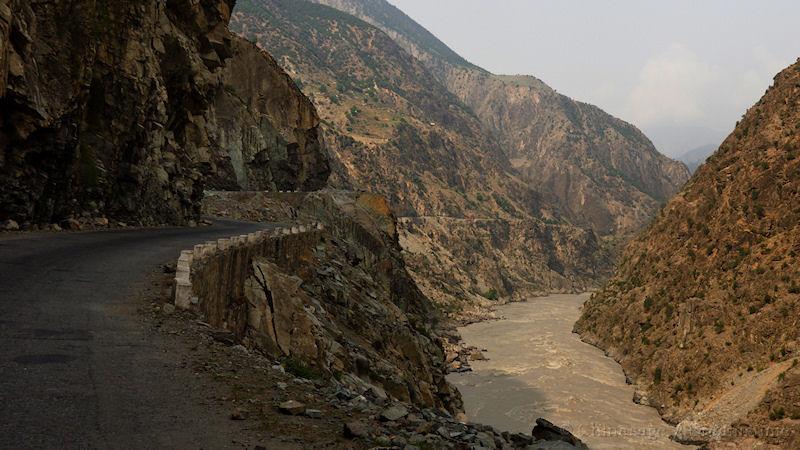
Hunza is in the disputed area of Kashmir but is usually considered part of Pakistan. The Karakoram Highway passes through the valley at the Kunjerab Pass.
15. Which of these provinces is NOT considered part of the region of Manchuria?
Jilin
Shanxi
Liaoning
The homeland of the Manchu people is spread along the Liao river, surrounded by mountains on three sides and the North China Sea to the south-west.
16. Which province is the most northerly in China?
Inner Mongolia
Heilongjiang
Jilin
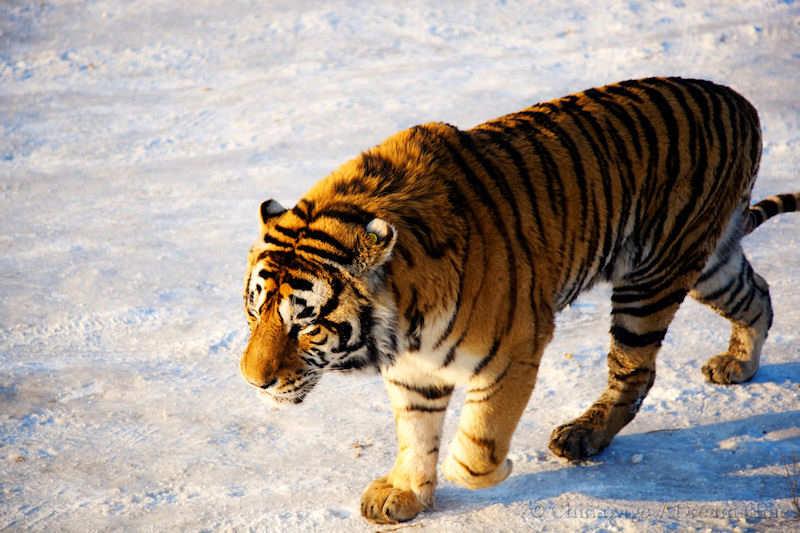
Heilongjiang stretches marginally further north than Inner Mongolia. It shares its harsh, cold winters with its Russian neighbor.
17. What is the name of the Chinese currency?
dong
renminbi
miao
The distinction between the name of the currency ( 人民币 rén mín bì) and the units (元 yuán) is like the difference between the British term sterling for the currency and pound as the unit.
18. Which is China's third largest province by area?
Tibet
Inner Mongolia
Sichuan
Inner Mongolia is surprisingly large, it marks an important buffer zone beyond the Great Wall and is partly covered by the Gobi desert.

 Medium level quiz about the geography of China.